Creating Opportunities in Albania: Inclusive Work and Social Protection for All
Lifelong Empowerment and Protection in Albania” (LEAP) Joint Programme
Albania is advancing bold reforms for a more inclusive society with the “Lifelong Empowerment and Protection in Albania” (LEAP) Joint Programme, a transformative initiative powered by the Joint SDG Fund and implemented by UNDP, UNICEF, ILO and UN Women. Together, these UN agencies are working to expand social protection, enhance care services, and unlock decent employment opportunities for children, women, youth, and the elderly—especially those in vulnerable situations.
This programme puts people at the center—from early childhood to old age—strengthening both dignity and opportunity throughout life.
But how do the various parts of this initiative come together to deliver results?
Redesigning Long-Term Care Services with Dignity and Empowerment at the Core
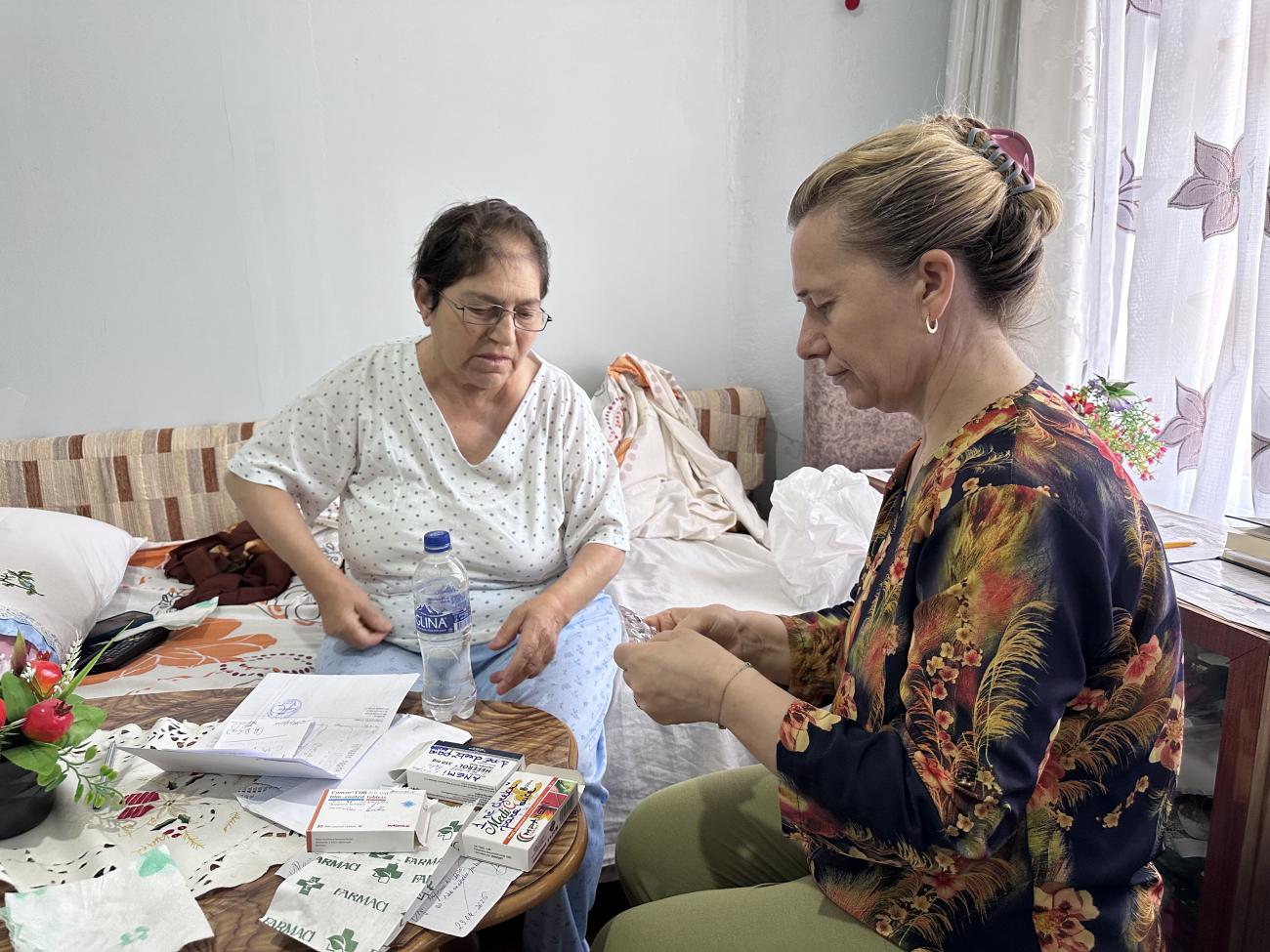
UNDP Albania plays a pivotal role in reimagining integrated social care and employment systems to meet the needs of Albania’s most vulnerable—particularly the elderly, families of children in need, caregivers, and youth disconnected from the labor market.

Albania’s aging population is growing rapidly, with nearly 20% of citizens over the age of 65. In response, UNDP is driving one of the programme’s flagship efforts: modeling Long-Term Care (LTC) services that are both dignified and employment-generating.
“When care becomes recognized work, it doesn’t just change lives—it builds an economy of dignity,” said Mirjeta Ramizi, UNDP Project Manager.
UNDP also supported the foundational “Aging in Albania” study, which has informed national policy and shaped the National Aging Plan (2025–2030). This research identifies gaps in access, service quality, and intergenerational support, and it is being used to pilot inclusive care models in six municipalities through CSO partnerships with organizations like ARSIS, Gruaja te Gruaja, Udhetim i Lire, Drejtesi Sociale, Instituti Liberal Pashko and YMCA.

Tourism Roadmap: A Gateway to Decent Work for Youth and Women
In parallel, UNDP has spearheaded the design of a Regional Skills Development and Employment Roadmap for the Tourism Sector in Lezhë and Vorë. The roadmap responds to high levels of youth unemployment and informality in the tourism sector by identifying key skills gaps, training needs, and employment opportunities for marginalized groups.
This effort contributes directly to the programme’s target of supporting 530 women and youth with access to decent work in hospitality and care—sectors with high growth potential and social return
From Pilot to Policy: LEAP as a System Builder
By embedding its pilots within national policy frameworks—such as the National Social Protection Strategy (2024–2030) and Employment and Skills Strategy (2023–2030)— LEAP’s successes go beyond short-term results. Through deep work with government, municipalities, and civil society, LEAP is helping Albania move toward a life-cycle-based social protection system that is inclusive, sustainable, and gender-sensitive.
“Albania is demonstrating that care and employment systems can be redesigned together to meet today’s challenges—with equity, foresight, and human dignity at the center,” said Eno Ngjela, Programme Specialist, UNDP.
Early Interventions and Child Benefit Reform
UNICEF is leading the work on supporting the Ministry of Health and Social Protection developing options to introduce the Universal Child Benefit framework and providing operational support for its rollout. Meanwhile, over 450 children have already benefited from the model of Universal Progressive Home Visiting (UPHV) approach which aims to support and engage families of young children, providing a holistic and family – centered care, contributing to strengthening parenting competencies, and reaching out to the most vulnerable, making disadvantaged families more visible and facilitating access to services. These efforts aim to reduce child poverty and improve early development outcomes, especially for marginalized families.
Transforming Early Childhood and accelerating the integrated model of cash and care for families in need- One Doorstep at a Time

Through the Universal Progressive Home Visit (UPHV) model, trained health personnel—often nurses and social workers— ensure to outreach the families and provide early childhood services directly to families, offering guidance on parenting, child development, nutrition, and mental health. The goal is profound: ensure that every child, regardless of income, location, or status, gets a fair start in life. The Universal progressive home visit has a particular focus on identifying children and families in need and at risk and ensuring facilitating access to other public services.
These visits aren’t just check-ins. They’re acts of care, trust, and transformation.
“We help mothers see that they already have the power to shape their child’s future,” said one nurse-. “Sometimes all they need is someone to believe in them.”
Building a Systemic Approach to Supporting Families on Economic Aid
Establishing a systemic and sustainable approach to supporting families receiving economic aid requires coordinated, multi-stakeholder partnerships and a family-empowerment focus. UNICEF, in collaboration with three municipalities and local civil society organizations, is currently supporting approximately 112 families benefiting from economic assistance. This initiative not only addresses their immediate needs but also accelerates access to essential and integrated services, including healthcare, education, psychosocial counselling, employment opportunities, vocational training, and early childhood development.
The core objective is to empower families to overcome social and economic barriers that limit their ability to provide for and protect their children. At the same time, the initiative invests in strengthening local service delivery systems, promoting an open-door approach among frontline professionals, and enhancing outreach to the most vulnerable and marginalized households.
This integrated model serves as a pathway for transforming the economic aid scheme from a passive welfare mechanism into a proactive and inclusive support system. By fostering community-based solutions and reinforcing the capacities of both families and institutions, the model aims to create long-term impact, enabling families to transition toward greater self-reliance, resilience, and improved well-being for children.
Catalyzing change towards a National Policy

When Ana, a young mother from Elbasan, opened the door to a woman in a blue vest, she had no idea that it would mark the beginning of a transformation—for her, her child, and her sense of purpose.
“I was lost. I didn’t know what to do or how to care for my baby,” Ana recalls in her story shared by UNICEF Albania. Like many women in Albania facing economic hardship, she lacked access to basic support. Her home was quiet—too quiet—without guidance, stimulation, or hope.
That changed with the Universal Progressive Home Visits (UPHV), an initiative led by UNICEF under the LEAP Joint Programme, supported by the UN Joint SDG Fund.
Ana’s story is just one among thousands—but it represents the core of what UNICEF is building through LEAP: a protective circle around every child, starting from the home, extending into community systems, and ultimately embedded in national policy.
As Albania works to scale up the UCB and integrate progressive home visits nationally, UNICEF’s work is proving that early investment in families is not just smart—it’s transformative.
“When we invest in a child, we invest in society. That’s the LEAP we’re making,” said Enkeleda Bregu, UNICEF Social Policy Specialist.
Special attention to pupils from the economic aid programme
The "Journey towards Employment" is the model supporting capacities of Vocational Training Centers (VTCs) with the development of a comprehensive curriculum and support materials on developing soft skills targeting 634 pupils from the economic aid programme and those out of education and employment receiving support from the Vocational Education and Training Centers in the municipalities of Kukës, Shkodër, Peshkopi, Bulqizë, Tiranë, Durrës, Vlorë, Sarandë, Berat, Gjirokastër.
A New Beginning: The Story of Ana, a young mother’s transformation journey in Elbasan
How Integrated Support Helped One Young Mother Reclaim Her Future Through Skills, Guidance, and Hope in Elbasan
This is the story of Ana*, a young mother from Elbasan whose journey of transformation inspires hope and determination. Years ago, Ana’s education was cut short due to serious financial hardships that her family was going through. She left school before completing the 9th grade and never had the chance to attend high school becoming a young woman not in employment, education or training (NEET). For a long time, she believed that her door to learning and employment had closed forever.
But change came when Ana joined the Aftësi për Punësim – Bashkëpunim për të Rinjtë në Nevojë/ Skills for Employment- Cooperation for youth in need project — a joint initiative by UNICEF, the National Agency for Employment and Skills (AKPA), and the Centre for Competitive Skills (CCS), part of the UN’s broader LEAP programme supported by the EU and partner governments. Her story is a testament to what happens when systems work together — when employment services, education, and psychosocial support come together with a shared vision
“For the first time in years, Ana found herself in a supportive environment that saw her not for what she lacked, but for the potential she held. This is key to ensuring that every young person is not left behind. “- said Mirlinda Bushati, the UNICEF Education and Adolescent Specialist.

Decent Work, Formalization, and a Sustainable Tourism Sector
The ILO is playing a catalytic role in addressing widespread informality in Albania’s booming tourism sector, which contributed over 8% to GDP and attracted nearly 12 million foreign visitors in 2024. In collaboration with the Ministry of Economy, Culture and Innovation—alongside government institutions, social partners, business associations, municipalities, academia, civil society, and development partners—ILO is co-developing a Roadmap for Employment and Formalization in Tourism to promote decent work and sustainable growth.
“Formalizing tourism jobs isn’t just a policy shift—it’s a pathway to stability and prosperity for thousands of Albanian workers,” said Fiorela Shalsi, ILO Project Coordinator, during the national workshop on tourism formalization.
The roadmap outlines four key priorities: simplifying registration and licensing, piloting incentives for small businesses and own-account workers, engaging social partners to co-design support models, and exploring tailored social insurance for seasonal workers. Grounded in European best practices and tailored to Albania’s local context, the roadmap addresses challenges such as seasonality, limited municipal capacity, and barriers to finance for small operators.
Next, the ILO and its social partners will pilot selected measures to demonstrate how inclusive formalization can work in practice. This initiative complements ILO’s broader support for extending social protection, reducing informality in care and tourism, and designing Active Labour Market Programmes (ALMPs) for women and youth—paving the way for a more regulated, equitable, and sustainable tourism economy in line with EU standards and the Sustainable Development Goals.
The ILO is playing a catalytic role in addressing widespread informality in Albania’s booming tourism sector, which contributed over 8% to GDP and attracted nearly 12 million foreign visitors in 2024. In collaboration with the Ministry of Economy, Culture and Innovation and Ministry of Tourism and Environment alongside government institutions, Association of Tour Operators, social partners, municipalities, academia, civil society, and development partners—ILO is co-developing a Roadmap for Employment and Formalization in Tourism to promote decent work and sustainable growth.

Empowering Women Through Inclusive Employment in Albania’s Tourism Sector
The ILO is strengthening inclusive employment pathways for marginalized women and those laid off from Albania’s garment industry—one of the sectors most affected by recent economic shifts. Through a holistic support model that combines career counseling, vocational training, apprenticeships, and job placement, the ILO aims to help women transition toward more stable and rewarding work in the growing tourism sector.
Following detailed field research and institutional assessments in five municipalities, the ILO identified specific regions where reintegration needs are highest. “Many of these women face structural barriers: long-term unemployment, care responsibilities, and limited access to guidance or training,” noted the director of the National Employment and Skills Agency (AKPA) in Shkodër.
Building on this groundwork, the ILO will roll out targeted support in one or two municipalities, in close collaboration with national institutions and local employers. The initiative promotes decent work, reducing inequalities, and empowering women—ensuring no one is left behind.
Empowering Women

UN Women ensures the programme integrates gender-responsive approaches throughout. It supports the development of inclusive standards in the care sector and promotes women’s economic reintegration, especially for those exiting informal or unpaid caregiving roles. This ensures women's voices are heard in the shaping of new policies and care economy solutions.
This joint programme is supported by the Joint SDG Fund. We sincerely appreciate the contributions from the European Union and the governments of Belgium, Denmark, Germany, Ireland, Italy, Luxembourg, Monaco, the Netherlands, Norway, Poland, Portugal, Republic of Korea, Saudi Arabia, Spain, Sweden, and Switzerland in accelerating progress towards the SDGs.


UN entities involved in this initiative
Goals we are supporting through this initiative