Click. Grow. Thrive: How Digital Tools Are Transforming Albania’s Rural Future
22 July 2025
Caption: Manjola Hafizi
Digital Agriculture and Rural Transformation in Albania (DART)
“Digitalization isn’t just a tool — it’s an accelerator for agrifood transformation and a key driver for achieving the 2030 Agenda. In a vital and dynamic sector like agriculture for Albania, it would be a missed opportunity not to harness its full potential. That’s the backbone of our vision in designing DART.” — Lorena Pullumbi, Assistant FAO Representative in Albania
Caption: Lorena Pullumbi - FAO
Across Albania’s rugged highlands and sunlit lowlands, a quiet but powerful transformation is underway. An evolving community of farmers, especially women and young people, is beginning to adopt digital tools and approaches, gradually reshaping traditional roles and practices. From precision agriculture in Korça to peer learning in Manëz, rural communities are opening up to innovation and exchanging knowledge in ways that were previously out of reach.
Driving this transformation is the Digital Agriculture for Rural Transformation (DART) project, a joint initiative of the Government of Albania and the United Nations. More than just a technology rollout, DART is a bold reimagining of rural potential, designed to make digital agriculture inclusive, strategic, and accessible to all.
The Challenge: A Digital Divide at the Roots
Over 41% of Albanians live in rural areas, where agriculture contributes 19% of GDP and provides over a third of all jobs. As Albania advances toward EU accession, women and youth in these areas are increasingly seen as key drivers of innovation. Yet many, such as the elderly, smallholders in remote areas, still face challenges in accessing the internet, essential information, e-services, and markets. Unlocking their full potential means investing in inclusive digital solutions that leave no one behind.
Bridging this divide requires more than technology alone — it starts with policy. Clear national strategies on Agriculture, as well as Albania’s Smart Specialization Strategy and the Digital Agenda, are laying the groundwork, setting a shared vision for inclusive digital transformation. With the right policies in place, Albania can unlock the full potential of digital agriculture: modernizing production, boosting rural incomes, and improving livelihoods across the countryside.
The DART project is helping turn this vision into action.
The Intervention: One Vision, Three Pillars, Many Partners
Led by FAO, in collaboration with ILO and ITU, and supported by the UN Resident Coordinator’s Office and the Ministry of Agriculture and Rural Development of Albania, DART merges global expertise with local leadership through three strategic pillars:
Policy: Supporting Albania’s first Strategy on Digital Agriculture and Rural Transformation, aligned with EU accession and national development goals.
Services: Upgrading the Farmers’ Portal, a national e-Gov platform that connects rural users to subsidies, updates, and online applications.
Skills: Training over 7,500 rural women, 400 farmers, 180 vocational students, and 120 rural youth in digital literacy, e-agriculture, and smart farming tools.
DART is built on an inclusive foundation, targeting those most at risk of digital exclusion, and ensuring Albania’s transformation is equitable as well as innovative.
Voices of Change: Real People, Real Impact
As digital tools begin to take root across Albania, the Farmers’ Portal is emerging as a vital platform—connecting people to services, information, and to each other.
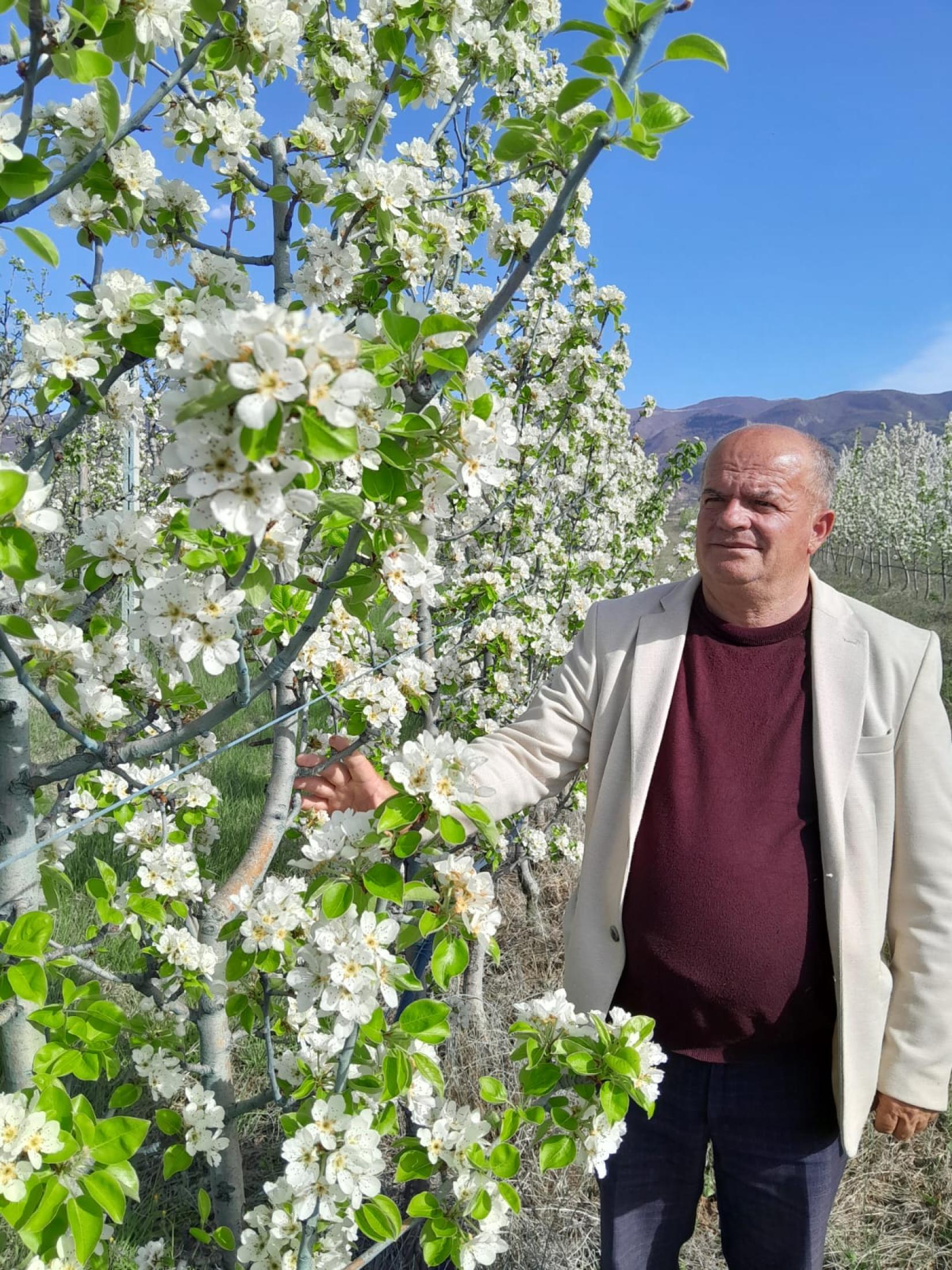
“Technology tells me what my farm needs, and it works,” says Ylver Bylykbashi, an apple grower in Korça. By adopting precision tools like sensors and smart irrigation systems, he’s improved yields and reduced waste. “Feeding the system with data, it guides me. This has changed my productivity,” he says. For Ylver, the Farmers’ Portal is more than a service hub—it’s a platform to share knowledge and raise standards across the farming community.
Caption: Ylver Bylykbashi
“The wrong information nearly cost me everything,” recalls Ergys Sevdari, a mixed farmer from Dibër Region, who cultivates fruits and raises cows. He once applied banned pesticides sold by an unscrupulous vendor. That near-catastrophe taught him the value of trustworthy information. “If we could use the portal to connect, to exchange, to stay informed, it would change how we work,” he says, speaking for the 50-member farmer group he coordinates.
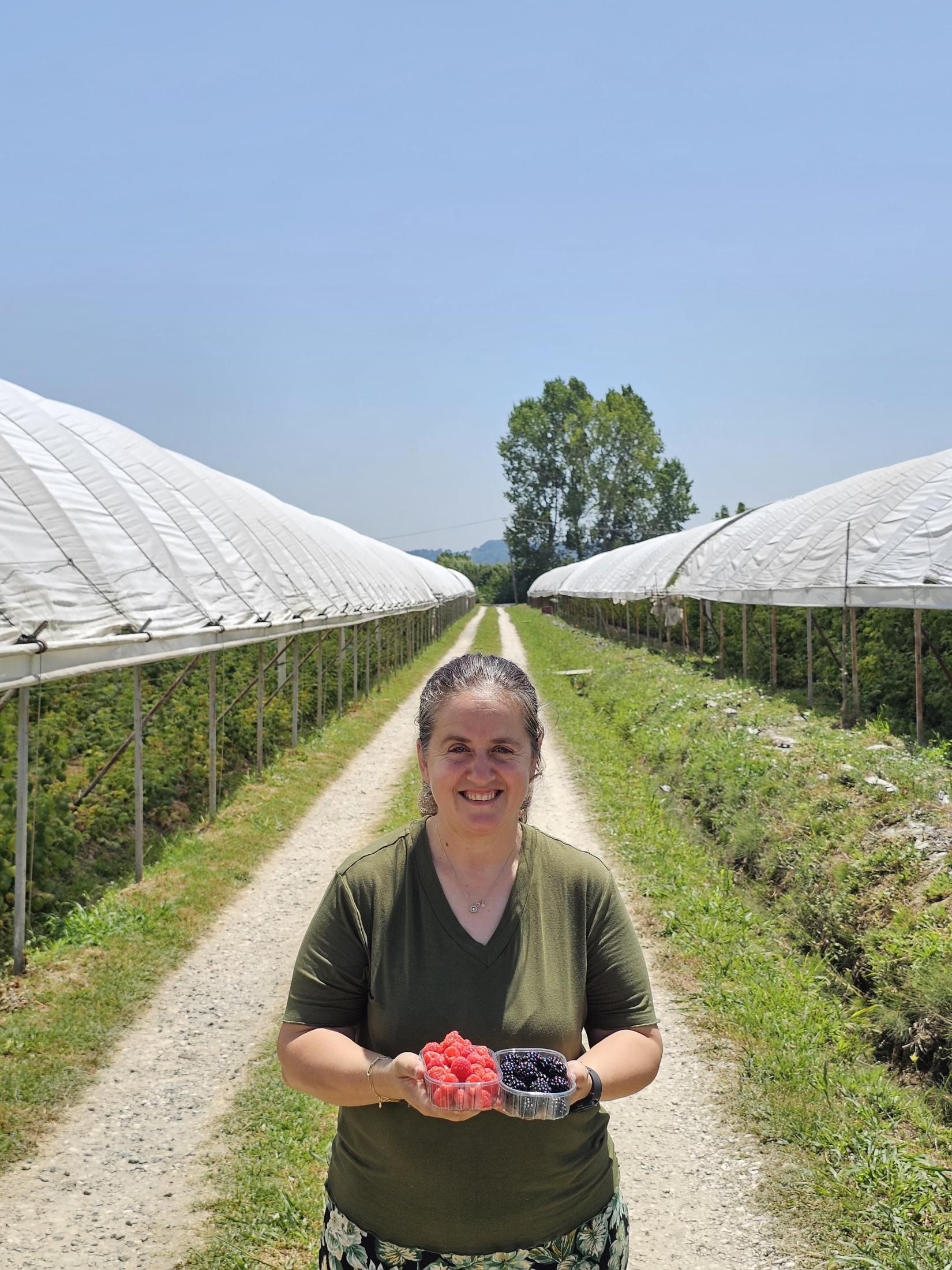
“Connection with other farmers means everything to me,” says Manjola Hafizi, a raspberry farmer in Manëz. The first woman in her village to grow raspberries commercially, Manjola believes in collective growth. “Being able to exchange experiences with other producers is one of the most important things,” she adds. Her idea, an AgroBot Forum within the Farmers’ Portal, envisions a space where farmers can share challenges, innovations, and support each other.
Caption: Manjola Hafizi
For Ervin Hajdaraga, Head of Agricultural Technology Transfer at MARD, “the biggest challenge isn’t introducing technology, it’s making sure it reaches the farm.”Through Agricultural Technology Transfer Centers, he sees how tailored, accessible content, like step-by-step videos, can democratize know-how. “The portal can become a digital extension service,” he notes, “making knowledge available to every farmer, regardless of geography.”
Caption: Ervin Hajdaraga
“Our students deserve the tools and training that match the future of agriculture.” say Matilda Canaku, Director, VET School in Golem, and Erina Disho, Director, VET School Cërrik. From outdated chalkboards to digital mapping and coding, vocational schools are on the frontlines of future-proofing Albanian agriculture. “We expect DART to support both equipment and training,” says Matilda. Erina adds: “Being part of the strategy design process helps us voice what VET schools really need.”
Tangible Gains: From Individuals to Institutions
DART’s early results are promising:
Over 500 farmers, educators, and local advisory staff already engaged through surveys, focus groups, and participatory assessments,
25+ local institutions actively shaping strategy priorities, Farmers’ Portal design, and capacity-building efforts — all paving the way to reach
7,500 rural women through targeted digital training in smart agriculture by the programme’s end.
But beyond metrics lies the deeper change: a more resilient, gender-responsive, and EU-aligned agricultural sector.
“We knew from the beginning that digital tools alone wouldn’t transform lives,” says Arsita Mati, National Coordinator of the DART Programme. “The real change comes from trust, co-creation, and designing around people’s needs. Every feature on the portal, every training session. It’s all built with the communities, not just for them.”
Caption: Arsita Mati
A UN Model for Integrated Action
The UN Resident Coordinator’s Office (RCO) played a pivotal role in DART’s creation, providing vision, policy coherence, and inter-agency coordination. By aligning FAO, ILO, and ITU with Albania’s national development goals, EU priorities, and the Sustainable Development Goals, the RCO turned “One UN” from philosophy into a practical model for delivery.
What’s Next: A Future Rooted in Opportunity
As vocational students code apps, raspberry farmers build networks, and orchard owners harness data, one thing is clear: Albania’s rural transformation is underway, and it’s being led from the ground up. With DART planting seeds of confidence, skills, and connection, a new generation of rural women, youth, and agricultural leaders is reshaping what it means to farm in the 21st century.
***
About the Programme
The “Digital Agriculture and Rural Transformation” (DART) is a three-year (2024–2027) programme funded by the Joint SDG Fund’s Digital Transformation Window through contributions from the European Union, Sweden, and Spain. Led by FAO with ILO, ITU, and Albania’s Ministry of Agriculture and Rural Development, it aims to develop a national digital agriculture strategy aligned with EU standards, enhance digital public services via the Albanian Farmers’ Portal, and build digital capacities among small-scale farmers, students, vocational schools, and public sector employees. Learn more.