

Latest
Story
06 January 2026
Albania’s Legal Aid Directorate Pushes to Close Gaps in Access to Justice for Refugees and Asylum-Seekers in Partnership with the European Union and UNHCR
Learn more
Story
29 December 2025
Celebrating 70 Years of Albania’s Membership in the United Nations
Learn more
Press Release
23 December 2025
UNHCR and Mediterranean University of Albania Formalise Academic and Research Cooperation on Refugee Protection
Learn more
Latest
The Sustainable Development Goals in Albania
The Sustainable Development Goals are a global call to action to end poverty, protect the earth’s environment and climate, and ensure that people everywhere can enjoy peace and prosperity. Learn how 19 UN Agencies work together to support Albania’s achievement of the SDGs. Click on any SDG icon below:
Story
29 July 2025
Creating Opportunities in Albania: Inclusive Work and Social Protection for All
Albania is advancing bold reforms for a more inclusive society with the “Lifelong Empowerment and Protection in Albania” (LEAP) Joint Programme, a transformative initiative powered by the Joint SDG Fund and implemented by UNDP, UNICEF, ILO and UN Women. Together, these UN agencies are working to expand social protection, enhance care services, and unlock decent employment opportunities for children, women, youth, persons with disabilities and the elderly—especially those in vulnerable situations.This programme puts people at the center—from early childhood to old age—strengthening both dignity and opportunity throughout life. But how do the various parts of this initiative come together to deliver results?Redesigning Long-Term Care Services with Dignity and Empowerment at the CoreUNDP Albania plays a pivotal role in reimagining integrated social care and employment systems to meet the needs of Albania’s most vulnerable—particularly the elderly, persons with disabilities, families of children in need, caregivers, and youth disconnected from the labor market. Albania’s aging population is growing rapidly, with nearly 20% of citizens over the age of 65. In response, UNDP is driving one of the programme’s flagship efforts: modeling Long-Term Care (LTC) services that are both dignified and employment-generating.“When care becomes recognized work, it doesn’t just change lives—it builds an economy of dignity,” said Mirjeta Ramizi, UNDP Project Manager.UNDP also supported the foundational “Aging in Albania” study, which has informed national policy and shaped the National Aging Plan (2025–2030). This research identifies gaps in access, service quality, and intergenerational support, and it is being used to pilot inclusive care models in six municipalities through CSO partnerships with organizations like ARSIS, Gruaja te Gruaja, Udhetim i Lire, Drejtesi Sociale, Instituti Liberal Pashko and YMCA. Tourism Roadmap: A Gateway to Decent Work for Youth and WomenIn parallel, UNDP has spearheaded the design of a Regional Skills Development and Employment Roadmap for the Tourism Sector in Lezhë and Vorë. The roadmap responds to high levels of youth unemployment and informality in the tourism sector by identifying key skills gaps, training needs, and employment opportunities for marginalized groups.This effort contributes directly to the programme’s target of supporting 530 women and youth with access to decent work in hospitality and care—sectors with high growth potential and social returnFrom Pilot to Policy: LEAP as a System BuilderBy embedding its pilots within national policy frameworks—such as the National Social Protection Strategy (2024–2030) and Employment and Skills Strategy (2023–2030)— LEAP’s successes go beyond short-term results. Through deep work with government, municipalities, and civil society, LEAP is helping Albania move toward a life-cycle-based social protection system that is inclusive, sustainable, and gender-sensitive.“Albania is demonstrating that care and employment systems can be redesigned together to meet today’s challenges—with equity, foresight, and human dignity at the center,” said Eno Ngjela, Programme Specialist, UNDP.Early Interventions and Child Benefit ReformUNICEF is leading the work on supporting the Ministry of Health and Social Protection developing options to introduce the Universal Child Benefit framework and providing operational support for its rollout. Meanwhile, over 450 children have already benefited from the model of Universal Progressive Home Visiting (UPHV) approach which aims to support and engage families of young children, providing a holistic and family – centered care, contributing to strengthening parenting competencies, and reaching out to the most vulnerable, making disadvantaged families more visible and facilitating access to services. These efforts aim to reduce child poverty and improve early development outcomes, especially for marginalized families.Transforming Early Childhood and accelerating the integrated model of cash and care for families in need- One Doorstep at a Time Through the Universal Progressive Home Visit (UPHV) model, trained health personnel—often nurses and social workers— ensure to outreach the families and provide early childhood services directly to families, offering guidance on parenting, child development, nutrition, and mental health. The goal is profound: ensure that every child, regardless of income, location, or status, gets a fair start in life. The Universal progressive home visit has a particular focus on identifying children and families in need and at risk and ensuring facilitating access to other public services. These visits aren’t just check-ins. They’re acts of care, trust, and transformation.“We help mothers see that they already have the power to shape their child’s future,” said one nurse-. “Sometimes all they need is someone to believe in them.”Building a Systemic Approach to Supporting Families on Economic AidEstablishing a systemic and sustainable approach to supporting families receiving economic aid requires coordinated, multi-stakeholder partnerships and a family-empowerment focus. UNICEF, in collaboration with three municipalities and local civil society organizations, is currently supporting approximately 112 families benefiting from economic assistance. This initiative not only addresses their immediate needs but also accelerates access to essential and integrated services, including healthcare, education, psychosocial counselling, employment opportunities, vocational training, and early childhood development.The core objective is to empower families to overcome social and economic barriers that limit their ability to provide for and protect their children. At the same time, the initiative invests in strengthening local service delivery systems, promoting an open-door approach among frontline professionals, and enhancing outreach to the most vulnerable and marginalized households.This integrated model serves as a pathway for transforming the economic aid scheme from a passive welfare mechanism into a proactive and inclusive support system. By fostering community-based solutions and reinforcing the capacities of both families and institutions, the model aims to create long-term impact, enabling families to transition toward greater self-reliance, resilience, and improved well-being for children.Catalyzing change towards a National Policy When Ana, a young mother from Elbasan, opened the door to a woman in a blue vest, she had no idea that it would mark the beginning of a transformation—for her, her child, and her sense of purpose.“I was lost. I didn’t know what to do or how to care for my baby,” Ana recalls in her story shared by UNICEF Albania. Like many women in Albania facing economic hardship, she lacked access to basic support. Her home was quiet—too quiet—without guidance, stimulation, or hope.That changed with the Universal Progressive Home Visits (UPHV), an initiative led by UNICEF under the LEAP Joint Programme, supported by the UN Joint SDG Fund.Ana’s story is just one among thousands—but it represents the core of what UNICEF is building through LEAP: a protective circle around every child, starting from the home, extending into community systems, and ultimately embedded in national policy.As Albania works to scale up the UCB and integrate progressive home visits nationally, UNICEF’s work is proving that early investment in families is not just smart—it’s transformative.“When we invest in a child, we invest in society. That’s the LEAP we’re making,” said Enkeleda Bregu, UNICEF Social Policy Specialist.Special attention to pupils from the economic aid programme The "Journey towards Employment" is the model supporting capacities of Vocational Training Centers (VTCs) with the development of a comprehensive curriculum and support materials on developing soft skills targeting 634 pupils from the economic aid programme and those out of education and employment receiving support from the Vocational Education and Training Centers in the municipalities of Kukës, Shkodër, Peshkopi, Bulqizë, Tiranë, Durrës, Vlorë, Sarandë, Berat, Gjirokastër. A New Beginning: The Story of Ana, a young mother’s transformation journey in ElbasanHow Integrated Support Helped One Young Mother Reclaim Her Future Through Skills, Guidance, and Hope in ElbasanThis is the story of Ana*, a young mother from Elbasan whose journey of transformation inspires hope and determination. Years ago, Ana’s education was cut short due to serious financial hardships that her family was going through. She left school before completing the 9th grade and never had the chance to attend high school becoming a young woman not in employment, education or training (NEET). For a long time, she believed that her door to learning and employment had closed forever. But change came when Ana joined the Aftësi për Punësim – Bashkëpunim për të Rinjtë në Nevojë/ Skills for Employment- Cooperation for youth in need project — a joint initiative by UNICEF, the National Agency for Employment and Skills (AKPA), and the Centre for Competitive Skills (CCS), part of the UN’s broader LEAP programme supported by the EU and partner governments. Her story is a testament to what happens when systems work together — when employment services, education, and psychosocial support come together with a shared vision“For the first time in years, Ana found herself in a supportive environment that saw her not for what she lacked, but for the potential she held. This is key to ensuring that every young person is not left behind. “- said Mirlinda Bushati, the UNICEF Education and Adolescent Specialist. Decent Work, Formalization, and a Sustainable Tourism SectorThe ILO is playing a catalytic role in addressing widespread informality in Albania’s booming tourism sector, which contributed over 8% to GDP and attracted nearly 12 million foreign visitors in 2024. In collaboration with the Ministry of Economy, Culture and Innovation—alongside government institutions, social partners, business associations, municipalities, academia, civil society, and development partners—ILO is co-developing a Roadmap for Employment and Formalization in Tourism to promote decent work and sustainable growth.“Formalizing tourism jobs isn’t just a policy shift—it’s a pathway to stability and prosperity for thousands of Albanian workers,” said Fiorela Shalsi, ILO Project Coordinator, during the national workshop on tourism formalization.The roadmap outlines four key priorities: simplifying registration and licensing, piloting incentives for small businesses and own-account workers, engaging social partners to co-design support models, and exploring tailored social insurance for seasonal workers. Grounded in European best practices and tailored to Albania’s local context, the roadmap addresses challenges such as seasonality, limited municipal capacity, and barriers to finance for small operators.Next, the ILO and its social partners will pilot selected measures to demonstrate how inclusive formalization can work in practice. This initiative complements ILO’s broader support for extending social protection, reducing informality in care and tourism, and designing Active Labour Market Programmes (ALMPs) for women and youth—paving the way for a more regulated, equitable, and sustainable tourism economy in line with EU standards and the Sustainable Development Goals.The ILO is playing a catalytic role in addressing widespread informality in Albania’s booming tourism sector, which contributed over 8% to GDP and attracted nearly 12 million foreign visitors in 2024. In collaboration with the Ministry of Economy, Culture and Innovation and Ministry of Tourism and Environment alongside government institutions, Association of Tour Operators, social partners, municipalities, academia, civil society, and development partners—ILO is co-developing a Roadmap for Employment and Formalization in Tourism to promote decent work and sustainable growth. Empowering Women Through Inclusive Employment in Albania’s Tourism SectorThe ILO is strengthening inclusive employment pathways for marginalized women and those laid off from Albania’s garment industry—one of the sectors most affected by recent economic shifts. Through a holistic support model that combines career counseling, vocational training, apprenticeships, and job placement, the ILO aims to help women transition toward more stable and rewarding work in the growing tourism sector.Following detailed field research and institutional assessments in five municipalities, the ILO identified specific regions where reintegration needs are highest. “Many of these women face structural barriers: long-term unemployment, care responsibilities, and limited access to guidance or training,” noted the director of the National Employment and Skills Agency (AKPA) in Shkodër.Building on this groundwork, the ILO will roll out targeted support in one or two municipalities, in close collaboration with national institutions and local employers. The initiative promotes decent work, reducing inequalities, and empowering women—ensuring no one is left behind.Empowering Women UN Women ensures the programme integrates gender-responsive approaches throughout. It supports the development of inclusive standards in the care sector and promotes women’s economic reintegration, especially for those exiting informal or unpaid caregiving roles. This ensures women's voices are heard in the shaping of new policies and care economy solutions.This joint programme is supported by the Joint SDG Fund. We sincerely appreciate the contributions from the European Union and the governments of Belgium, Denmark, Germany, Ireland, Italy, Luxembourg, Monaco, the Netherlands, Norway, Poland, Portugal, Republic of Korea, Saudi Arabia, Spain, Sweden, and Switzerland in accelerating progress towards the SDGs.
1 of 2

Story
19 May 2025
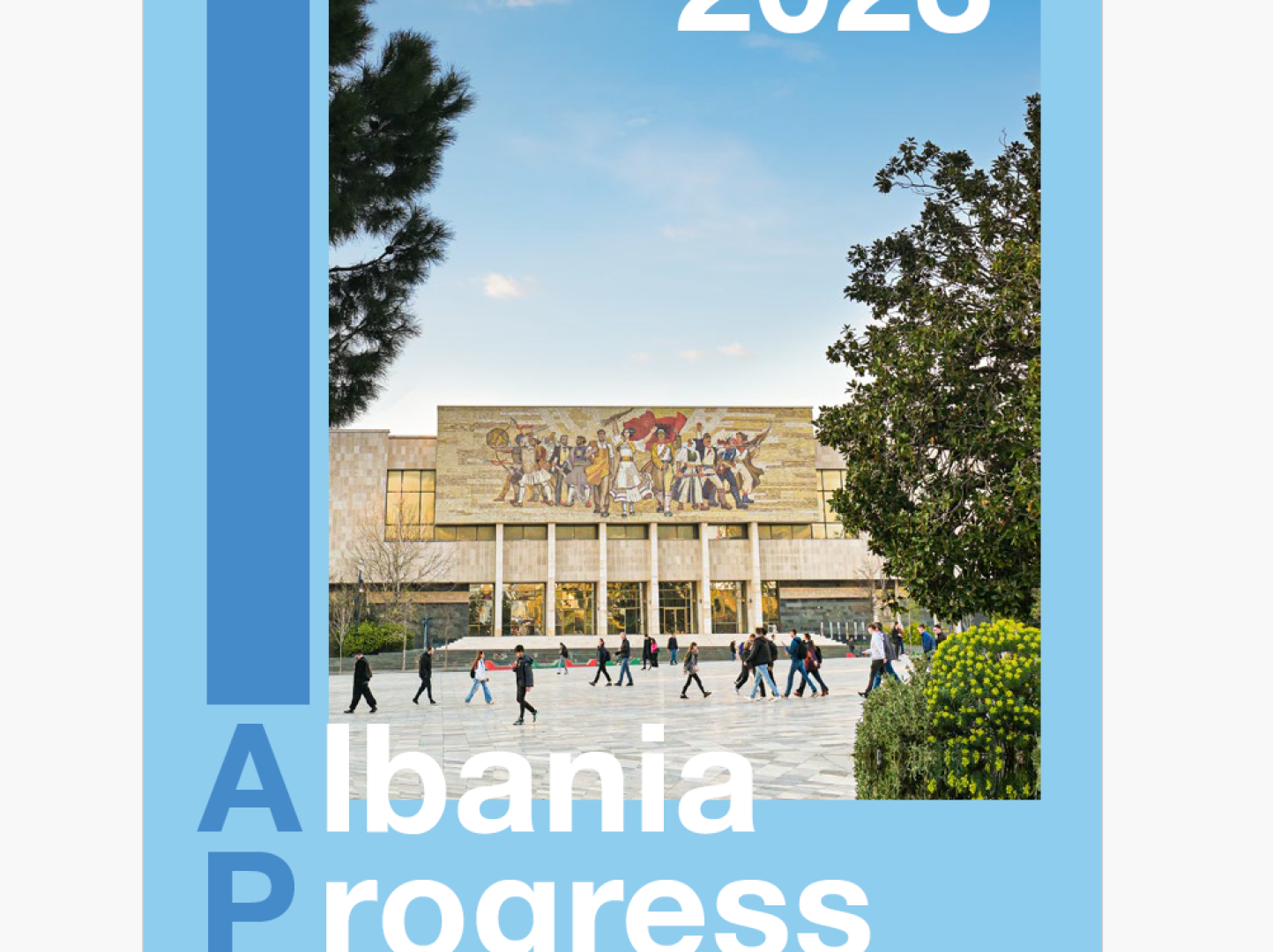
The 2024 Albania Progress Report of the United Nations in Albania Published
Dear partners and friends,We are pleased to present the 2024 Albania Progress Report of the United Nations in Albania (click here to access a web based version of the report). The report highlights the collective achievements in advancing the country’s journey toward the 2030 Agenda for Sustainable Development and its integration into the European Union. These efforts are guided by the Government of Albania–UN Sustainable Development Cooperation Framework (UNSDCF) 2022–2026.The accomplishments showcased in this report reflect the critical role that partnerships play in ensuring the successful implementation of the Framework, with strong and ongoing collaboration among the UN, government, the private sector, civil society, academia, and international partners. Their combined efforts have been essential to achieving these successes.Significant achievements include two transformative joint programmes financed by the Sustainable Development Goal Fund: Digital Agriculture and Rural Transformation (DART) and Lifelong Empowerment and Protection in Albania. Meanwhile, the country’s first National SDG Roadmap was successfully created, with other initiatives such as the Women Entrepreneurship Expo aiming to foster an inclusive business environment, with six companies joining the UN Global Compact and 38 pledging support for the Women’s Empowerment Principles.Our support for building the country’s human capital focuses on effectively implementing reforms in social care, education, and healthcare. Albania’s participation in the Global Accelerator on Jobs and Social Protection for Just Transition underscores its commitment to advancing labour policies, social welfare, and inclusive measures for vulnerable groups. Adoption of the Social Protection Strategy (2024–2030) and the Social Inclusion Policy (2024-2028) lays the foundation for enhanced services and the inclusion of vulnerable groups of the population. Repair and reconstruction of 66 education facilities damaged by the 2019 earthquake benefited more than 24,000 students, and training was provided for more than 1,300 teachers in inclusive education and digital learning. Investments include the establishment of 47 IT labs, 107 science laboratories, 56 psychological–nursery rooms, and 66 sports fields and gyms. Primary healthcare advancement, emergency preparedness, and effective public health management are central to Albania’s health strategy. A transparency portal and a GIS platform aim to improve planning and address infrastructure needs, while vaccination, child nutrition monitoring, and emergency preparedness have been improved.Green growth and efforts to combat climate change have driven progress in climate-smart agriculture, vocational education, and digital transformation. Employment and skills development initiatives reached thousands of individuals, while work on the green and blue economies saw gender integration in tourism, and the revitalization of Albania’s cultural heritage, with 18 cultural sites benefiting from restoration and upgraded facilities. Implementation of the groundbreaking DART aims to leverage digitalization to advance sustainability goals with systemic interventions aimed particularly at smallholder farmers. The country also advanced in fulfilling its commitments under the Montreal Protocol by implementing systems to phase out ozone-depleting substances and adopting low-global-warming technologies. Albania made progress in governance and human rights, underpinned by key policy changes and strategic interventions. The country is improving access to justice, particularly for marginalized populations. Ongoing investments in legal aid, judicial efficiency, and a child-centred approach to justice are creating a more inclusive and responsive legal system. The implementation roadmap of the Convention on the Elimination of All Forms of Discrimination against Women, and the National Migration Strategy 2024–2030, is supporting the alignment of national laws with international human rights standards. Additionally, the finalization of the Population and Housing Census 2023 is a significant achievement enabling detailed analysis of trends, disparities, and needs across the population. Gender equality in Albania has been supported by a robust legal framework and improvements in key indices. The country has made notable progress in advancing gender equality and addressing violence against women and children. Support from the UN enhanced services for survivors of domestic violence, trafficking, and other forms of abuse, providing both immediate assistance and long-term empowerment for women and children from vulnerable groups. Gender-responsive budgeting has become an integral part of Albania’s financial planning. As a result, 59 per cent of budgetary programmes for 2025 now incorporate gender-specific objectives, driving more equitable resource distribution and policy implementation. Additionally, efforts to strengthen national gender equality mechanisms are bolstered by legal reforms.We extend our deepest appreciation to all our partners for their invaluable contributions and look forward to continuing our collaboration in 2025, working together to build a more resilient, inclusive, and sustainable Albania. We invite you to read our report and explore the progress made in Albania in 2024!
1 of 2

Story
06 January 2026
Albania’s Legal Aid Directorate Pushes to Close Gaps in Access to Justice for Refugees and Asylum-Seekers in Partnership with the European Union and UNHCR
TIRANA — When Albania established its Free Legal Aid Directorate in 2020, it marked a major shift toward guaranteeing state-funded legal assistance for those unable to afford it. Five years later, the institution has expanded from two to 20 legal aid centres across the country, providing thousands of people in Albania with essential legal support every year. Yet as Director General Patricia Pogaçe explains, one group remains almost entirely unable to benefit: refugees and asylum-seekers.During an interview in Tirana, Pogaçe reflected on how the 2020 legal aid reform “reformed the whole scheme of free legal aid guaranteed by the state,” introducing a clear system of primary and secondary legal aid while expanding eligibility to 12 special categories of vulnerable groups, including survivors of domestic violence, trafficking victims, minors in conflict with the law, and persons with disabilities. These groups are exempt from many documentation and procedural requirements, a provision that recognizes both the challenges they face in obtaining documentation and the need for timely access to legal aid.But despite legal provisions affirming the right of refugees and asylum-seekers to free legal assistance, they are not included in these special categories. This omission forces them to pass through eligibility filters that they are structurally unable to meet. They must present documentation proving they have no income or that they fall under a special category—documents they often lack due to displacement, the urgency of flight, and, in some cases, the requirement to produce records issued by their country of origin.“The law states that refugees and asylum-seekers can benefit from primary legal services, but not automatically,” Pogaçe said. “De facto, it is impossible for them to get secondary legal aid nowadays.” Courts, which must approve secondary legal aid, routinely reject applications that lack full documentation. As a result, not a single refugee or asylum-seeker has received state-funded secondary legal representation. Their only access to counsel has been through specialised NGOs operating outside the state scheme. It is precisely this structural exclusion that the consultancy led by UNHCR, with support from the European Union, aims to address. The collaboration is designed to help the Directorate identify legal gaps, map practical obstacles, and prepare concrete proposals for amending the legal framework so that refugees and asylum-seekers can receive legal aid automatically, just like other vulnerable groups. Pogaçe described the initiative as “very helpful for us to have simplified, clarifying procedures on how to give primary and secondary legal aid for these categories based on different examples of EU member states.”The consultancy has been deeply consultative, involving legal aid providers across Albania who consistently reported similar challenges: the absence of translation services, limited technical knowledge of asylum procedures, difficulty detecting cases involving trauma or trafficking, and uncertainty around verifying refugee status. Pogaçe acknowledged that legal aid providers “haven’t learned this field in school,” underscoring the urgent need for sustained capacity-building. The EU-UNHCR-supported work is expected to outline a comprehensive training pathway for both primary and secondary legal aid providers. Albania’s efforts to strengthen its legal aid system are closely monitored within the EU accession process, where access to justice and non-discrimination remain critical benchmarks. The European Commission has already highlighted the country’s expanding legal aid system as a reform success story, and this progress has become part of Albania’s broader integration priorities, reflected in the National Strategy for Integration under the access to justice component. But Pogaçe stressed that the next phase must focus on quality and inclusiveness: “Our main objective now is to ensure that every citizen and every category receive efficient and specialised legal aid.”With the support of UNHCR and the European Union, the Directorate is preparing a package of legal amendments that will not only address the exclusion of refugees but also streamline procedures that have proved cumbersome over the past five years. Better institutional coordination, especially with bodies overseeing asylum and civil documentation, is also emerging as a priority.Despite more than 500 outreach activities conducted by the Directorate this year, Pogaçe admits that public awareness of free legal aid remains low. Centres now work under monthly case-reach targets, prompting more proactive community engagement. In 2025, the Directorate assisted 5,673 people, and this number is expected to rise as reforms take hold.For Pogaçe, who has been part of the institution since its creation, the work is not merely administrative. Having previously worked directly with survivors of domestic violence, she describes legal aid as both a professional and moral obligation. The anticipated legal reforms, driven in part by the UNHCR–EU consultancy, are, in her view, essential to ensuring that Albania’s justice system reflects its European aspirations and moral commitments.As the country moves steadily along the path to EU integration, Pogaçe hopes the legal aid framework will evolve to guarantee equal access to justice for all, including the refugees and asylum-seekers who arrive at Albania’s borders seeking safety and a chance to rebuild their lives.
1 of 5

Story
29 December 2025
Celebrating 70 Years of Albania’s Membership in the United Nations
As the year draws to a close, we celebrate a milestone of profound significance: the 70th anniversary of Albania’s membership in the United Nations. On 14 December 1955, Albania joined the UN alongside 15 other countries, affirming its commitment to multilateralism and to the shared principles of peace, cooperation, and respect for international law. Albania has played an active role within the United Nations, contributing to international efforts to promote peace and security, advance sustainable development, and uphold human rights. Most recently, Albania served as a non-permanent member of the UN Security Council from 2022 to 2023, is currently a member of the Human Rights Council, and has co-led successfully the negotiations on the outcomes of the World Summit on the Information Society (WSIS+20) review process. Over the years, Albania has also deployed hundreds of peacekeepers to UN missions worldwide, contributing directly to stability and protection in fragile and conflict-affected contexts. Albania’s engagement with the United Nations is further reflected in the hundreds of Albanian professionals working across the UN system globally and at country level, including national staff in Albania. Their daily work - across peace and security, development, humanitarian action, and human rights - demonstrates Albania’s contribution to multilateral action in practical and human terms. At the country level, the partnership between the Government of Albania and the United Nations has continued to deepen, supporting national priorities and reforms, advancing the Sustainable Development Goals, in line with the country's major objective of becoming a member of the European Union, by strengthening institutions, human capital, social cohesion, and resilience across economic, social, environmental, and human rights dimensions. This cooperation reflects a shared responsibility to deliver tangible results for people and to ensure that no one is left behind. As we commemorate this anniversary during the festive season, we are reminded that effective multilateral cooperation is not only a legacy of the past 70 years, but a necessity for the future. Together, we reaffirm our commitment to a strong and effective United Nations and to continued partnership in addressing global and national challenges. The Ministry for Europe and Foreign Affairs of Albania and the United Nations in Albania extend their warmest wishes for a joyful holiday season and a New Year marked by renewed hope, progress, and a strengthened partnership in service of humanity.
1 of 5

Story
01 December 2025
From Albania’s Heartland to International Markets
In the midst of global market pressures, shifting consumer expectations, and Albania’s longstanding challenges with rural migration, a quiet but powerful movement is emerging across the country’s northern and southeastern regions. It is led not by large corporations, but by small and medium-sized producers—families, artisans, and local entrepreneurs—who are choosing not just to survive, but to grow, improve, and reach beyond national borders. From Shkodra’s rugged landscapes to Korça’s fertile plains, a quiet transformation is unfolding. Not the kind sparked by big factories or multinational corporations, but by small family businesses, young entrepreneurs, who believe that local products can shine on international shelves.Faced with growing opportunities in the European market and rising global demand for herbal, natural, and artisanal products, nine SMEs have stepped forward to strengthen their standards, improve their processes, and prepare for export readiness. Their journeys are supported by the Global Quality and Standards Programme (GQSP Albania), implemented by UNIDO and funded by the Swiss Government through SECO. This is not only the story of certification. It is the story of ambition, courage, and the rediscovery of Albania’s natural wealth.“Quality as a Journey: why these SMEs said yes to change”For years, Albanian products—cheeses, wines, soaps, herbal teas—have carried the taste and scent of the land. But entering European markets requires more than authenticity. It requires traceability, safety, documentation, and internationally recognized standards.These nine SMEs didn’t see this as an obstacle. They saw it as a bridge. Certification—ISO 9001:2015, HACCP, ISO 22000:2018, GMP—is their passport into the world beyond Albania’s borders. And with every new form, every documented process, every corrected procedure, their confidence grows. They are not simply preparing for audits. They are preparing for opportunity.Natyra Ime: turning herbs into export-ready beautyIn a quiet workshop in northern Albania, surrounded by fields of lavender, sage, and mountain tea, Natyra Ime is creating something meaningful—one handmade soap at a time. Their products, crafted from olive oil and medicinal and aromatic plants (MAPs), reflect purity, sustainability, and a profound connection to nature.Each soap is more than a cosmetic item—it is a cultural expression. It carries the labor of rural women who gather herbs by hand, the biodiversity of Albania’s mountainous region, and the aspiration to bring local identity into international cosmetic markets. Through GQSP’s support, Natyra Ime is now preparing for ISO 9001:2015, ensuring that every bar of soap meets the consistency, documentation, and traceability required for export. Their story shows how tradition, when paired with standards, becomes opportunity.Djathi Veleçik: where mountain herbs meet modern standards Nestled in the highlands, Djathi Veleçik has turned blueberries and sage into signature artisanal cheeses—products that speak to both innovation and heritage. But as the business looks outward, toward specialty European markets, they recognize that flavor must be accompanied by food-safety assurance. By engaging in HACCP and ISO 22000:2018 preparation, Djathi Veleçik is building systems that allow its cheeses to safely enter the broader value chain. Documented processes, risk analyses, and traceability bring the company closer to distributors and delicatessens across the region.Their journey shows how Albania’s mountain products can become premium export goods when backed by internationally recognized standards.Bujtina Këlmendi: herbal hospitality that travels beyond bordersIn the heart of Shkodra’s mountains, Bujtina Këlmendi has long welcomed visitors with teas, infusions, and traditional dishes flavored with local MAPs. Yet their ambition stretches further: to have their herbal products reach customers far beyond Albania’s borders.Through HACCP preparation, the company is shifting from informal tradition to structured, export-ready production—without losing the authenticity at the core of its identity.Their story reflects the rise of gastronomic tourism and the growing global appetite for herbal, artisanal products.Kantina Mani and Kantina Ersi: Wines Infused with Albania’s Botanical SoulTwo wineries—Mani in Shkodra and Ersi in Korça—are blending oenology with botanicals. Their MAPs-infused wines and liqueurs are unlike anything found across Europe. But the road to export requires rigorous safety practices.
Through HACCP, these wineries are creating beverages that are not only unique—but compliant, traceable, and internationally marketable.Their bottles now carry both tradition and certification.Amortentia: essential oil soaps for eco-conscious marketsAmortentia’s essential-oil soaps—crafted with care, intention, and locally sourced botanicals—speak to a growing global audience seeking natural, eco-friendly cosmetics. By advancing toward ISO 9001:2015, the company is building the systems required to scale production, maintain consistency, and communicate trust to international consumers.Their story shows how even the smallest artisanal producers can enter global markets when quality becomes central.Vila Melko & Agro Fruit: from traditional foods to export-ready productsThese two producers share a belief: Albania’s culinary heritage deserves global recognition. Vila Melko focuses on MAPs-based foods and teas, Agro Fruit enhances value through dried fruits and botanical blends. Through HACCP and ISO 22000:2018, they are building systems that meet EU expectations—turning local flavors into export-ready products.MAPs Warehouses: the hidden backbone of every exportBefore MAPs become teas, oils, soaps, wines, or cosmetics, they pass through the hands of processors who dry, sort, and store them. This step defines purity and quality. Preparing for GMP means MAPs Warehouses in Korça are raising the standard not just for themselves—but for the entire value chain. They ensure every exported herb begins with integrity.Local Roots, Global VisionThese nine producers—distinct in size, craft, and history—are united by a shared vision: to elevate Albanian products through quality, standards, and export readiness. Each of them, in their own way, is demonstrating that competitiveness begins with commitment, discipline, and pride in one’s heritage.Their work directly contributes to several global development priorities. By improving agricultural practices and strengthening herbal value chains, they advance SDG 2: sustainable agriculture. Through the active role of women in production, harvesting, and artisanal processing, they support SDG 5: empowerment of rural women. By creating jobs, improving working conditions, and expanding opportunities in rural zones, they enhance SDG 8: decent work and economic growth. Their adoption of certification systems and innovation in processing aligns with SDG 9: industry innovation and certification, while their emphasis on careful resource use and waste reduction reinforces SDG 12: sustainable production. Finally, with their focus on natural products and eco-friendly practices, they contribute to SDG 13: climate-conscious development.What unites them is not only their entrepreneurial drive, but also the strategic and technical support offered through GQSP Albania, implemented by UNIDO and funded by SECO. This support has helped them to professionalize internal operations, improve documentation, strengthen safety and quality systems, and prepare for certification—all essential steps for entering regional and international markets.Their journeys remind us that development does not always begin somewhere else. Often, it begins right where your roots are—in a workshop filled with handmade soaps, in a vineyard touched by mountain air, in a dairy blending tradition with innovation, or in a drying room where herbs are sorted by hand. It begins with people who believe that quality opens doors, and cooperation keeps them open.Through their example, these SMEs are inspiring a new generation of Albanian producers to imagine a future where local products do not simply survive, but thrive—where they travel, compete, and proudly represent Albania across the world.
Through HACCP, these wineries are creating beverages that are not only unique—but compliant, traceable, and internationally marketable.Their bottles now carry both tradition and certification.Amortentia: essential oil soaps for eco-conscious marketsAmortentia’s essential-oil soaps—crafted with care, intention, and locally sourced botanicals—speak to a growing global audience seeking natural, eco-friendly cosmetics. By advancing toward ISO 9001:2015, the company is building the systems required to scale production, maintain consistency, and communicate trust to international consumers.Their story shows how even the smallest artisanal producers can enter global markets when quality becomes central.Vila Melko & Agro Fruit: from traditional foods to export-ready productsThese two producers share a belief: Albania’s culinary heritage deserves global recognition. Vila Melko focuses on MAPs-based foods and teas, Agro Fruit enhances value through dried fruits and botanical blends. Through HACCP and ISO 22000:2018, they are building systems that meet EU expectations—turning local flavors into export-ready products.MAPs Warehouses: the hidden backbone of every exportBefore MAPs become teas, oils, soaps, wines, or cosmetics, they pass through the hands of processors who dry, sort, and store them. This step defines purity and quality. Preparing for GMP means MAPs Warehouses in Korça are raising the standard not just for themselves—but for the entire value chain. They ensure every exported herb begins with integrity.Local Roots, Global VisionThese nine producers—distinct in size, craft, and history—are united by a shared vision: to elevate Albanian products through quality, standards, and export readiness. Each of them, in their own way, is demonstrating that competitiveness begins with commitment, discipline, and pride in one’s heritage.Their work directly contributes to several global development priorities. By improving agricultural practices and strengthening herbal value chains, they advance SDG 2: sustainable agriculture. Through the active role of women in production, harvesting, and artisanal processing, they support SDG 5: empowerment of rural women. By creating jobs, improving working conditions, and expanding opportunities in rural zones, they enhance SDG 8: decent work and economic growth. Their adoption of certification systems and innovation in processing aligns with SDG 9: industry innovation and certification, while their emphasis on careful resource use and waste reduction reinforces SDG 12: sustainable production. Finally, with their focus on natural products and eco-friendly practices, they contribute to SDG 13: climate-conscious development.What unites them is not only their entrepreneurial drive, but also the strategic and technical support offered through GQSP Albania, implemented by UNIDO and funded by SECO. This support has helped them to professionalize internal operations, improve documentation, strengthen safety and quality systems, and prepare for certification—all essential steps for entering regional and international markets.Their journeys remind us that development does not always begin somewhere else. Often, it begins right where your roots are—in a workshop filled with handmade soaps, in a vineyard touched by mountain air, in a dairy blending tradition with innovation, or in a drying room where herbs are sorted by hand. It begins with people who believe that quality opens doors, and cooperation keeps them open.Through their example, these SMEs are inspiring a new generation of Albanian producers to imagine a future where local products do not simply survive, but thrive—where they travel, compete, and proudly represent Albania across the world.
1 of 5

Story
10 November 2025
Guided Through Hope: With the EU support, legal aid empowers people seeking asylum in Albania
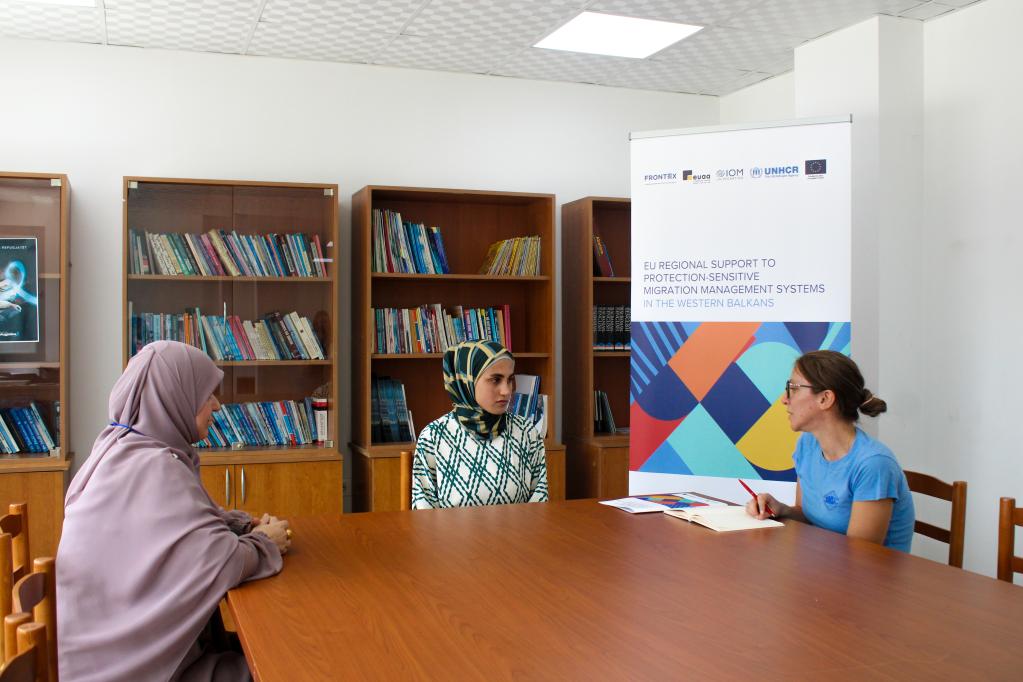
At the National Reception Centre for Asylum in Tirana, the first thing people seeking asylum encounter isn’t a procedure, it’s a person. Someone who listens. Someone who explains. Someone who helps.That’s what Gledis does. A legal counsellor with Refugee and Migrant Services in Albania (RMSA), a UNHCR national NGO partner, Gledis meets with people who have fled conflict, violence, or persecution and who are now seeking asylum in Albania. Whether newly arrived or temporarily residing at the Centre, they turn to her for guidance. She is on-site weekly and responds when Kejsi, a social worker at the Centre, alerts her about new arrivals referred by border police, helping provide timely and accurate legal support from the outset.“Many have just crossed borders. They’re tired, scared, and unsure of their future,” Gledis says. “Legal counselling means helping them understand their rights, the asylum process, and what support is available.”“I wanted to submit my asylum application, but I had so many questions about how the process worked,” says Leila, who fled Syria. “Meeting Gledis helped me understand each step. Now I know what to expect.” The National Reception Centre for Asylum, Albania’s main state-run facility for people seeking international protection, offers temporary accommodation, psychosocial counselling, language courses, and other essential services to individuals awaiting decisions on their asylum claims. Legal counselling is a vital part of this support and often provides the first moment of clarity for those navigating an unfamiliar system. One-on-one sessions cover everything from registration and asylum interviews to documentation, family tracing, and access to services such as healthcare and education.This work is grounded in collaboration. In her role as a social worker, Kejsi helps identify those in need and refers them for legal support. “They’ve been through so much,” she says. “We try to make this a place where people feel informed and supported from the moment they arrive.”Marwa, who arrived in Albania with her husband after fleeing Syria, applied for asylum in late April 2025 and is now awaiting her second interview with national authorities. Gledis has been supporting them in navigating the process and understanding their rights. A trained dentist, Marwa says: “In today’s counselling session, I asked Gledis about how I can continue my education and what steps I need to take to practice my profession in Albania. I also asked about accessing healthcare for a mild skin condition I recently developed. After speaking with her, I always feel clearer.”Gladis’s and Kejsi’s work is part of a programme funded by the European Union. The Regional Support to Protection-Sensitive Migration Management Systems in the Western Balkans and Türkiye, aims to strengthen the asylum system in Albania is implemented by UNHCR in close coordination with national institutions and partners. Beyond individual counselling, the programme invests in long-term national capacity. Legal practitioners across Albania receive specialized training, and a legal clinic launched in partnership with the Faculty of Law at the University of Tirana will soon expand access to free legal aid for even more refugees and asylum-seekers. “This kind of investment builds sustainability,” says Enkelejda, Protection Associate at UNHCR. “It strengthens the system, not just for today, but for the future.”Thanks to this ongoing support from the European Union, dozens of people in Albania receive free legal counselling each year, guidance that can change the course of their lives. Since the programme started in 2023 till May 2025, around 1,800 have received legal counselling. At the National Reception Centre in Tirana, with timely legal counselling and shared commitment, people seeking asylum in Albania can move forward with greater confidence and hope.
1 of 5
Story
30 October 2025
Better Together: Albania Celebrates 80th Anniversary of the UN
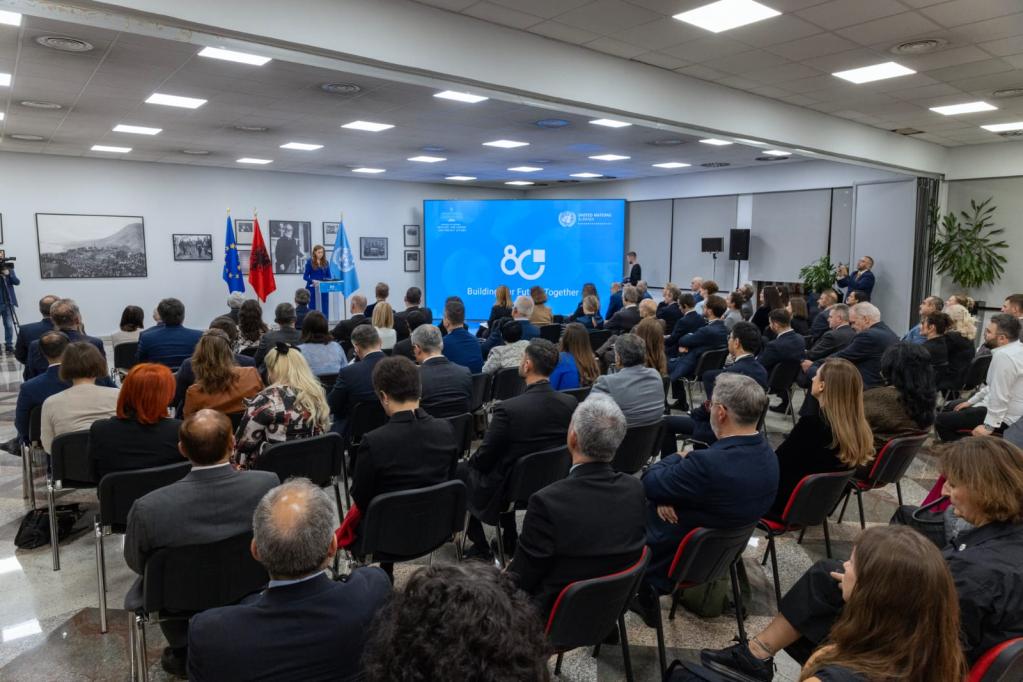
Following a week of inspiring events marking United Nations Day 2025 in Albania, I want to extend my heartfelt thanks to the UN team, partners, and friends who helped make these celebrations so meaningful. Together, we truly embodied the spirit of Delivering as One.The celebrations were especially significant as the world marks the 80-year anniversary of the United Nations and Albania celebrates 70 years as a member state of the UN — milestones that remind us of the importance of our shared humanity and commitment to peace, partnership, and progress.UN DAY RECEPTION (Read full story here)On 24 October, hosted by the Ministry of Europe and Foreign Affairs in Albania, we gathered together with the government, diplomatic core and key stakeholders to reflect on the continued importance of multilateralism, dialogue and peace. The event opened with a video message from UN Secretary-General António Guterres, reminding us that today’s global challenges — from climate change to conflict and inequality — can only be solved through unity and collective action. His call to “stand together to fulfill the extraordinary promise of the United Nations” set a powerful tone for the evening. Following the message, I was pleased to address the audience alongside Deputy Minister for Europe and Foreign Affairs Vilma Premti and Youth Delegate Alesia Dodaj. Together, we highlighted our importance of building a more peaceful, sustainable, and inclusive world. The sight of UN and Albanian flags lining Tirana’s main boulevard was also a moving symbol of partnership and solidarity — admired by thousands across the capital. 🎶 “BETTER TOGETHER” – CONCERT FOR PEACE AND SOLIDARITYThat evening, UN Albania, in partnership with the Ministry of Tourism, Culture and Sports, hosted the concert Better Together — an artistic tribute to the mission and ideals of the YN Charter. As part of Tirana’s International Cultural Weeks, the event featured Albanian and international artists who celebrated the values and principles set out in the UN Charter - through music, poetry, and spoken word. On behalf of the UN team in Albania, my sincere thanks to the Ministry of Tourism, Culture and Sports for their collaboration and support in making this celebration possible. The energy, creativity, and sense of unity in the room truly reflected the best of our collective spirit — and reminded us that we are, indeed, better together. 🎓 INVESTING IN ALBANIA’S FUTURE – HUMAN CAPITAL DEVELOPMENT CONFERENCEOn the morning of UN Day, hosted by the College of Europe Tirana campus, together with the EU Delegation and the World Bank, we convened academia, policymakers, and development partners to explore how education, skills, and knowledge can drive Albania’s sustainable development and EU path.As I shared during the event: “Investing in people is at the heart of Albania’s sustainable development and European future. Academia is key to this journey — for evidence, data, knowledge, and skills.” My thanks also to UNICEF Albania for leading this effort on behalf of the UN team. Read the full story on this conference here.💬 READ OUR JOINT OP-ED WITH EU Ambassador Silvio Gonzato and World Bank Representative Massimiliano Paolucci on why Albania’s strength lies in its people:🔗 [Read in English]🔗 [Lexoni në shqip] 💜 SWEDEN–UN PARTNERSHIP TO END VIOLENCE AGAINST WOMEN (EVAW II)Just ahead of UN Day, we were also proud to renew our partnership with the Embassy of Sweden and the Government of Albania to extend the UN Joint Programme to End Violence Against Women until 2027.This extension reaffirms our shared commitment for ensuring that every woman and girl in Albania can live free from violence and discrimination.Led by UN Women, with UNDP and UNFPA, and supported by SIDA, the programme continues to strengthen prevention, protection, legal reform, and social norm transformation — a clear example of our whole-of-society approach in action. (Read the full story here)🌍 LOOKING AHEAD – WORLD SOCIAL SUMMIT 2025, DOHANext week, I will travel to Doha for the World Social Summit 2025, joining a high-level delegation from Albania led by President Bajram Begaj, Minister of Health and Social Welfare Evis Salla, Deputy Minister of Economy and Innovation Olta Manjani, and Albania’s Permanent Representative to the UN, Ambassador Suela Janina.It is such an exciting moment for Albania to be among the pathfinder countries for social protection, especially as the nation advances on its EU accession journey. We look forward to sharing Albania’s experience and deepening partnerships to build a more inclusive and equitable future for all.Read more about the Doha Social Summit. ***As we close this memorable week, I want to express my deep gratitude to all who contributed — colleagues across the UN Country Team, government, partners, academia, artists, and friends. Your dedication and teamwork continue to strengthen our partnership for a fairer, greener, and more inclusive future.
1 of 5
Press Release
23 December 2025
UNHCR and Mediterranean University of Albania Formalise Academic and Research Cooperation on Refugee Protection
Tirana, Albania – UNHCR, the UN Refugee Agency, and the Mediterranean University of Albania have signed a Memorandum of Understanding (MoU) establishing a framework for cooperation in research, education, training, and knowledge exchange related to refugee protection, asylum, and statelessness. The MoU recognises the Parties’ mutual interests in research, development, education, training, and the dissemination of knowledge, and provides a framework for joint participation in projects and initiatives of shared interest. Through this agreement, the Mediterranean University of Albania joins UNHCR’s network of institutional partners contributing to academic engagement and learning on refugee protection.Cooperation under the MoU includes the development of joint projects, research initiatives, seminars, workshops, webinars, and other academic activities. It also foresees the reciprocal exchange of information and resources, including research materials, publications, textbooks, and professional references.The partnership further allows for cooperation in organising legal clinics or academic courses for students, with the aim of strengthening their knowledge and capacities in international refugee law and related principles applicable to asylum-seekers and refugees.At the signing ceremony, Toshitsuki Kawauchi, UNHCR Representative in Albania, highlighted the value of academic collaboration in advancing understanding of refugee protection. “Academic institutions play an important role in research, education, and dialogue on refugee protection and international law. This agreement formalises our cooperation with the Mediterranean University of Albania in these areas,” the Representative said. Prof. Dr. Adrian Civici, Rector of the Mediterranean University of Albania, underlined the university’s role in education and social engagement. “This cooperation provides a structured framework for engaging students and academic staff in learning and research related to refugee protection and international legal principles,” the Rector said.Through this framework agreement, UNHCR and the Mediterranean University of Albania aim to strengthen academic cooperation and knowledge dissemination related to refugee protection, asylum, and statelessness in Albania.
1 of 5
Press Release
16 December 2025
UNOPS: EU for Property Rights Project Advances Property Rights and Land Administration Reform in Albania
The EU for Property Rights (EU4PR) project, a €9.5 million EU-funded initiative implemented by UNOPS, has commenced its implementation phase in Albania. The project, running from 25 September 2025 until November 2028, aims to support Albanian authorities in strengthening property rights through the modernization of land administration systems, addressing challenges in property registration and cadastral data management, and improving the transparency, and accessibility of property-related information. The project will also support piloting of the Land Parcel Identification System (LPIS), aligned with EU standards.
To ensure alignment among key stakeholders, a high-level roundtable was organized by the State Cadastre Agency (SCA), bringing together representatives from national institutions, development partners, and implementing agencies. The roundtable provided an opportunity to present the project’s objectives, as well as to reinforce coordination with the State Cadastre Agency). Following the roundtable, the EU4PR project team, together with representatives of ARDA, conducted a field visit to the villages of Roshnik and Kutalli in the Berat region. The visit focused on the presentation and pilot implementation of the LPIS methodology and enabled direct engagement with ARDA inspectors. This hands-on field activity supported practical implementation, on the ground, and marked an important step toward advancing the LPIS pilot under the EU for Property Rights project.
To ensure alignment among key stakeholders, a high-level roundtable was organized by the State Cadastre Agency (SCA), bringing together representatives from national institutions, development partners, and implementing agencies. The roundtable provided an opportunity to present the project’s objectives, as well as to reinforce coordination with the State Cadastre Agency). Following the roundtable, the EU4PR project team, together with representatives of ARDA, conducted a field visit to the villages of Roshnik and Kutalli in the Berat region. The visit focused on the presentation and pilot implementation of the LPIS methodology and enabled direct engagement with ARDA inspectors. This hands-on field activity supported practical implementation, on the ground, and marked an important step toward advancing the LPIS pilot under the EU for Property Rights project.
1 of 5
Press Release
16 December 2025
Albania launches the 2025 Country Gender Equality Profile: Progress made but problems persist for women and girls
The report - funded by the EU and produced in close collaboration with public institutions, civil society and academia - provides evidence of recent achievements and remaining challenges faced by women and girls across key areas.The Country Profile shows that Albania has made progress in strengthening its legal and policy framework on gender equality, in accordance with global commitments and EU requirements. Implementation of laws and policies however remains uneven, leaving many women behind. Women in Albania continue to face barriers in accessing economic opportunities and are victims of several forms of violence. The event was attended by high level officials UN Resident Coordinator Ingrid Macdonald, EU Ambassador Silvio Gonzato and Minister of Health and Social Welfare Evis Sala, who at a panel discussed the findings of the report. The United Nations Resident Coordinator in Albania, Ingrid Macdonald highlighted the urgency of moving from commitments to concrete action:"The Country Gender Equality Profile for Albania shows that whilst there are strong commitments, too many women and girls still face critical barriers that limit their rights and choices, which in turn undermines the country’s overall social and economic progress. So today is a pivotal moment for collective action to get gender equality on track. If we want Albania to accelerate sustainable development, and benefit from the EU reforms, it is imperative to invest in the systems and services that promote and empower women and men, boys and girls equally.” EU Ambassador Silvio Gonzato stressed that gender equality is fundamental to Albania’s future and its EU aspirations: “Gender-based violence is a serious human rights issue in Albania. The right to live free from violence is a fundamental human right and an essential component of Albania’s EU accession negotiation process. To achieve real change in society, we need an effective implementation of the new laws and the creation of an efficient and supportive system for victims. We must also join forces to change mindsets that tolerate violent behaviour and stigmatise victims, so that women and girls can feel safe and protected in Albania.” Minister of Health and Social Welfare, prof. Evis Sala emphasized the central role of recent legislative reforms in strengthening Albania’s response to gender inequality and ensuring equitable protection and opportunities for all women and girls.Minister of Health and Social Welfare:"The new Law on Gender Equality and the implementation of the National Strategy for Gender Equality 2021–2030, together with gender-responsive budgeting, which now accounts for 10% of the national budget, demonstrate that Albania is transforming gender equality from a principle into concrete policy"The Country Profile underscores that increased investments for the implementation of the new Gender Equality Law, and the upcoming Law on Violence Against Women and Girls and Domestic Violence are essential to close gaps. To address these issues, the report includes several recommendations, such as for example: strengthening institutional capacity to address violence against women, improving data and evidence on gender equality, investing in services that reduce and redistribute unpaid care work, promoting women active contributions to the economy and to decision making at the local level. The Country Gender Equality Profile is an important tool for broader, coordinated efforts to advance gender equality in Albania. As the country moves closer to EU accession, the Profile offers a roadmap for aligning policies and legislation to EU gender equality standards, and for accelerated action on SDG 5 - the global goal on gender equality - so that every woman and girl living in Albania can fully realise their rights and potential.Key figures at a glance: https://albania.unwomen.org/sites/default/files/2025-12/cgep_infographic_eng.pdf
1 of 5
Press Release
10 December 2025
The Secretary-General : Message for Human Rights Day “Human rights: our everyday essentials"
It was a philosophical and political breakthrough — and it has been the bedrock of our global community ever since.Human rights — civil, political, economic, social and cultural — are inalienable, indivisible and interdependent. But recent years have brought a shrinking of civic space. We have grave violations that signal a flagrant disregard for rights, and a callous indifference to human suffering.Together, we have the power to confront these injustices: by protecting the institutions that make human rights a lived reality.Every day, the United Nations helps people around the world realize their most basic rights. Together with civil society and governments, we deliver food and provide shelter; support education and elections; clear mines; defend the environment; empower women; and strive for peace.But we cannot do it alone. This work depends on all people, everywhere, taking a stand. When we protect the most vulnerable, when we refuse to look away, when we speak up for the institutions that speak up for us, we keep human rights alive.Our rights should never take second place to profit or power. Let us unite to protect them, for the dignity and freedom of all.
1 of 5
Press Release
03 December 2025
The Secretary-General — Message on the International Day of Persons with Disabilities
The Doha Political Declaration, adopted at last month’s World Summit for Social Development, reaffirms a critical truth: there can be no sustainable development without the inclusion of people with disabilities.People with disabilities drive progress that benefits us all. Their leadership has improved disaster preparedness, expanded inclusive education and employment, and ensured humanitarian responses reach those most at risk.Many innovations that shape our daily lives — from text messaging to voice-activated technology — began as solutions developed by and for people with disabilities. Yet systemic barriers persist: discrimination, poverty, and inaccessible services continue to limit the participation of the over one billion people with disabilities worldwide.On this International Day of Persons with Disabilities, let us commit to working side-by-side with persons with disabilities in all their diversity, as equal partners.When inclusion is real, everyone benefits. Together, we can build more accessible, resilient societies where all of us thrive.
1 of 5
Latest Resources
1 / 11


Resources
02 December 2024


1 / 11
